A supplier can put the same full-spectrum label on two liquids without giving a buyer the information needed to choose a device. The useful question is what the finished formulation does inside its proposed reservoir, seals, and heating assembly. Full spectrum CBD vape hardware selection should begin with a dated formulation specification and a validation plan, rather than a promise that a particular coil works with every extract.
Our scope is CBD AIO HARDWARE: an empty all-in-one device, shipped with no fill. The brand and its qualified formulation partner supply and assess the intended liquid. Filled consumer products are the other side of this market and appear here only for comparison. References to full spectrum CBD vape hardware describe a procurement application; they do not mean that a hardware factory supplies CBD oil or approves its use.
This discussion does not constitute legal advice, a formulation recipe, or an inhalation-risk assessment. A favorable sample result cannot establish product authorization or a general health claim. Full spectrum CBD vape hardware needs separate reviews of the liquid, the assembled device, the destination, and the proposed claims. Keep those reviews distinct so that an electrical test or a laboratory certificate is not presented as permission to market the finished product.
The comparison is not a contest between a richer extract and a purer ingredient. It is a decision about the evidence attached to a specific commercial formulation. An isolate-based liquid may contain several other ingredients, while a full-spectrum product may vary between lots. For full spectrum CBD vape hardware, the practical output is a controlled pairing of formulation revision and device revision, supported by records that another team can reproduce.
Define Full Spectrum CBD Vape Hardware by the Finished Liquid
Use full spectrum, broad spectrum, and isolate as preliminary descriptions that require written clarification. Ask which cannabinoids were measured, which ingredients were added, and which method supports the stated profile. An isolate names a starting material, not necessarily the entire liquid delivered for evaluation. A full spectrum CBD vape hardware brief should identify the final mixture by supplier, revision, and lot, with a confidential route for disclosing its composition to the people responsible for testing.
Labels deserve verification rather than automatic acceptance. A 2024 product-analysis study tested 202 commercial CBD products, including 34 vape products, and reported that some spectrum claims did not match its analytical definitions. Its overall results span several product categories and are not a defect rate for vape hardware. The procurement lesson is narrower: require evidence for the claimed composition instead of using the package description as the specification.
Write down what remains unknown before requesting a quote. A certificate may report cannabinoids while omitting other constituents relevant to the proposed evaluation. Ask the formulation partner to identify those gaps and decide which additional information is needed. For full spectrum CBD vape hardware, an unanswered question should become an assigned task with an owner and a due date. It should not silently become a favorable assumption in a sample order or a production specification.
Keep the terminology consistent across the brief, sample labels, and purchasing record. If a supplier changes from one extract source to another, preserve the old identity in the history and issue a new revision. Full spectrum CBD vape hardware cannot be qualified against a moving description. A documented change does not automatically disqualify the formulation, but it does require the responsible team to explain whether the existing evidence still applies before another batch is accepted.
Compare Flow and Physical Stability Without Guessing
Do not rank liquids as thick or thin solely from their spectrum names. Request measured flow or viscosity information with the method, temperature, sample identity, and units attached. Two numbers are comparable only when their measurement conditions permit comparison. A full spectrum CBD vape hardware assessment should use the final intended liquid and its documented range of storage and use conditions. There is no universal viscosity threshold in this article and no assumption that isolate-based liquid is always thinner.
Separate a clear appearance from a demonstrated stable formulation. Ask the qualified partner to assess whether crystals, separation, or other physical changes appear over the intended handling period. Pope Scientific describes crystallization as part of CBD isolation; that process description is not a finished-vape compatibility test. For full spectrum CBD vape hardware, physical observations should be recorded on the actual formulation, rather than inferred from a raw-ingredient photograph or a statement about extract purity.
Create an observation sheet that distinguishes what was seen from what caused it. Record sample age, storage history, orientation, visible deposits, and the time of each inspection. A deposit near an inlet may justify investigation, but its appearance alone does not identify its chemistry. Full spectrum CBD vape hardware decisions improve when retained samples and laboratory work can resolve an anomaly. Avoid asking a production operator to diagnose an unknown material from color or a single photograph.
Agree the response to physical change before evaluating samples. A useful procurement rule is to quarantine the affected lot and ask the formulation partner to investigate, with any retesting decision documented. Do not write a purchasing specification that tells an end user to repair an unstable liquid. For full spectrum CBD vape hardware, the acceptance question is whether the approved formulation remains suitable for the intended device and conditions, not whether a temporary intervention makes one sample look normal.
Specify Full Spectrum CBD Vape Hardware as a Controlled Assembly
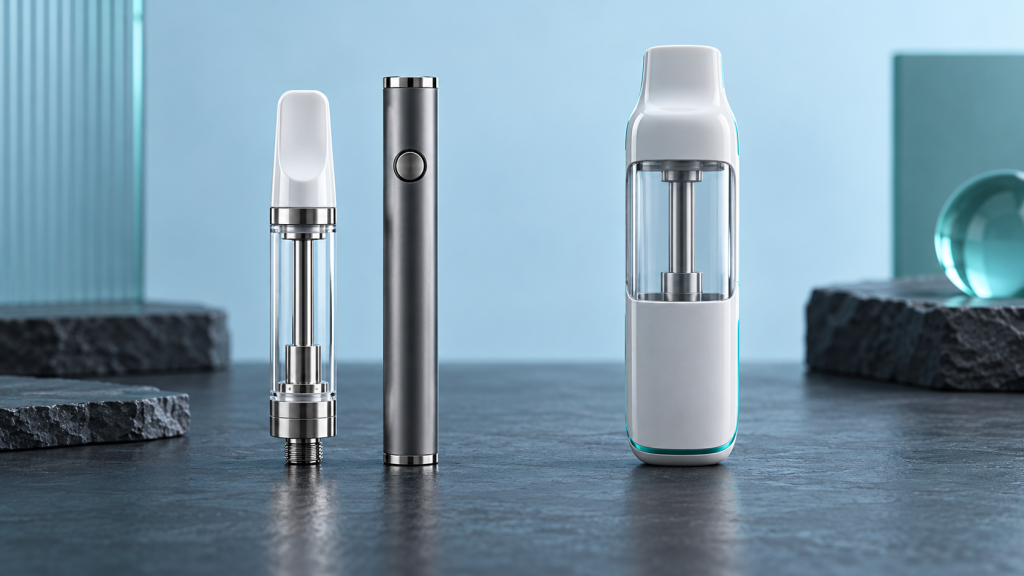
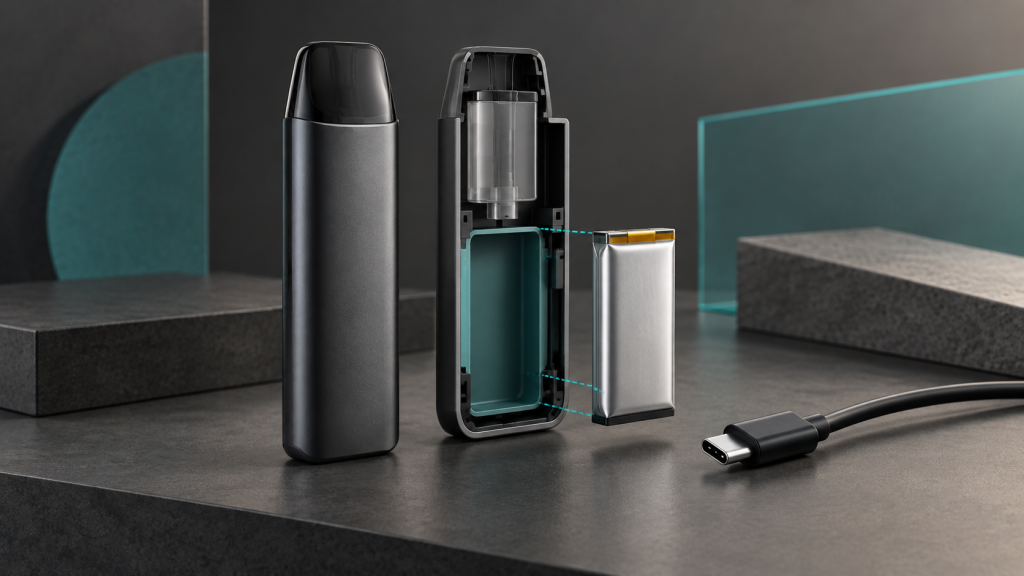
Ask for the device configuration that was actually evaluated, including the reservoir, liquid-contact materials, seals, heating assembly, electrical control, and relevant dimensions. A generic ceramic-coil description does not identify all those elements. Full spectrum CBD vape hardware should have a revision identifier that appears on the test record and purchase specification. If a component changes, the supplier should flag the change before shipment so the buyer can decide what evidence must be refreshed.
Treat heating-element material as one input to the assessment, not a guarantee of results. Request the supplier’s written operating specification and the evidence supporting the proposed liquid-device pairing. This article does not prescribe a voltage, resistance, inlet size, or filling temperature. Full spectrum CBD vape hardware selection belongs with qualified testing of the assembled product. A buyer should decline a universal settings claim when the supplier cannot identify the formulation and hardware revision behind it.
Liquid-contact compatibility needs its own evidence. Ask which materials contact the formulation, which evaluation was performed, how long contact lasted, and what was measured afterward. An electrical certificate does not answer those questions. A full spectrum CBD vape hardware review should distinguish a material declaration, a supplier assessment, and a laboratory result. Each has a different scope, and none should be renamed as comprehensive product approval simply because the purchasing team wants one document.
Keep the format decision separate from the oil-type decision. An all-in-one and a cartridge introduce different components and purchasing responsibilities, even when they use the same formulation. The cartridge versus disposable comparison covers that broader format choice. Here, full spectrum CBD vape hardware qualification means controlling the specific assembly selected, without assuming that evidence from another reservoir, battery arrangement, or supplier transfers unchanged. Record any proposed transfer of evidence and the technical reason for accepting it.
Keep Storage Evidence Separate From Aerosol Evidence
Chemical stability and physical appearance answer different questions. Schwarzenberg and colleagues studied a prototype CBD e-liquid over four weeks and found storage-condition-dependent changes in its chemical profile. That work supports checking stability; it does not establish the shelf life of an unrelated commercial formulation. Full spectrum CBD vape hardware procurement should request a stability plan tied to the intended liquid, container, packaging, and conditions, with analytical review by a qualified laboratory.
Do not equate a liquid certificate with an aerosol result. Identify whether a report tested the raw ingredient, the finished liquid, a stored filled device, or emissions from the specified assembly. Those are different test objects. For full spectrum CBD vape hardware, the purchasing file should show which question each report answers and which questions remain open. A favorable assay of unheated liquid does not by itself characterize what the assembled device emits during its intended operation.
Commission an appropriate testing program with the specialists responsible for the product and destination. Ask them to state the methods, limits of detection, sample handling, and interpretation boundaries. Full spectrum CBD vape hardware does not become suitable through a checklist copied from a nicotine product or a different extract. The program should explain how samples represent the proposed commercial configuration and why its endpoints address the relevant questions, without converting a limited result into an unqualified safety statement.
Separate research findings from production acceptance criteria. Published studies can reveal questions worth investigating, while a commercial acceptance limit requires its own justified basis and responsible sign-off. Maintain both in the file, with clear labels. For full spectrum CBD vape hardware, this distinction stops a paper’s experimental conditions from becoming an unsupported factory instruction. It also allows an auditor to see whether a failure reflects the agreed criterion, an exploratory observation, or a question that has not yet been resolved.
Validate Full Spectrum CBD Vape Hardware With Traceable Samples
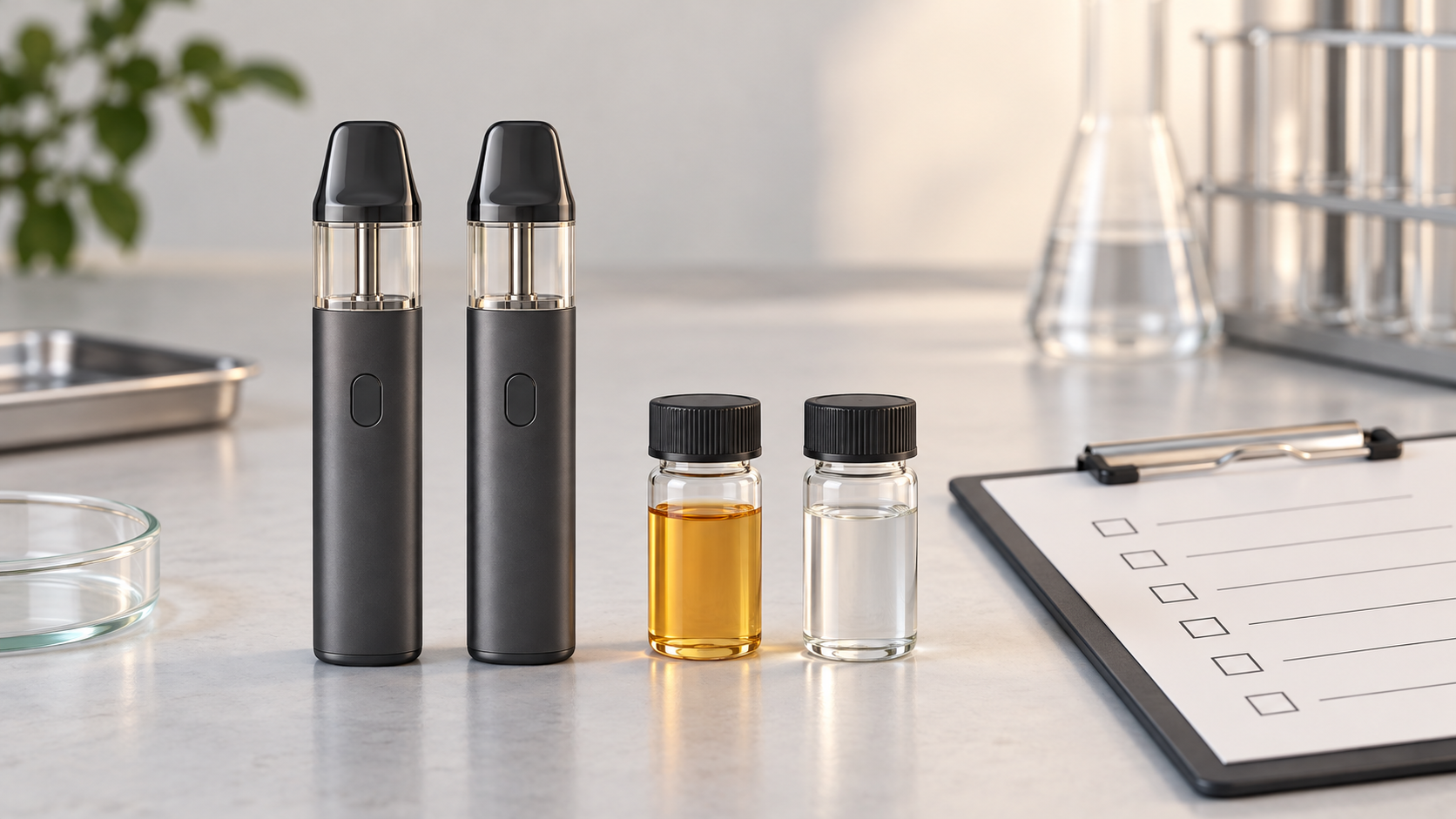
Design the comparison before looking at sample results. Keep the device revision fixed while comparing documented formulations, or keep the formulation fixed while evaluating device revisions. Changing both together makes a difference harder to interpret. A full spectrum CBD vape hardware trial should identify its question, sample groups, assigned responsibilities, and reporting format in advance. This is a proposed purchasing method, not a published universal test standard or a substitute for the laboratory’s product-specific protocol.
Give every sample a traceable identifier and record its actual history. Include the formulation lot, hardware lot, assembly date, test date, and handling deviations. Keep the person reviewing results able to distinguish approved production samples from an earlier engineering prototype. Full spectrum CBD vape hardware evidence is weakened when a successful sample cannot be linked to the configuration offered for sale. Retained samples and photographs can support the record, but neither replaces the identification of the tested materials.
Report functional observations separately from chemical and regulatory findings. The purchasing team may need to understand leakage, incomplete operation, or visible changes, while specialists assess other endpoints under their own methods. For full spectrum CBD vape hardware, a single combined pass label can hide an unresolved issue. Use a report that names each assessment, its outcome, its reviewer, and its limitation. Where results conflict, keep the decision open and assign the investigation rather than averaging away the discrepancy.
Do not let a demonstration replace documented review. A supplier video may show that a sample operates once, but it cannot establish its composition, representativeness, or performance throughout the intended period. Full spectrum CBD vape hardware approval should identify the evidence considered and the conditions attached to release. The manufacturer-selection guide addresses supplier due diligence; this comparison adds the need to connect that supplier assessment to a particular formulation-device pair and its actual validation record.
Review Claims and Market Access Independently
A spectrum label is not a market-access conclusion. The FDA’s cannabis-derived-product warning-letter page documents enforcement activity involving products marketed with unlawful claims or other violations. It does not grant a general authorization for a CBD vape. Full spectrum CBD vape hardware buyers should have qualified advisers assess the actual formulation, finished product, destination, and proposed wording before commercial release. Do not infer permission from the absence of a warning letter naming a supplier.
Check the claims attached to both spectrum categories. Neither an isolate designation nor a full-spectrum designation supports a promise of superior effects, zero exposure, or suitability for everyone. A laboratory result has a method and a reporting limit; it should be described within those boundaries. For full spectrum CBD vape hardware, ask the responsible reviewer to approve the exact words used on packaging and sales material. Do not let a marketing rewrite extend beyond the evidence that was actually reviewed.
Keep the compliance file current without copying historical deadlines from another article. Record the source, jurisdiction, review date, product scope, and responsible adviser for each legal conclusion. Full spectrum CBD vape hardware procurement may involve several markets with different rules, so a conclusion for one destination must not silently cover another. This article intentionally provides no universal THC cutoff or statutory timetable. The actual requirements belong in a current, product-specific review that accounts for amendments and local restrictions.
Assign release authority across the brand, formulation partner, hardware supplier, and testing specialists. State who supplies each document and who decides when evidence is sufficient for the proposed action. Full spectrum CBD vape hardware should not enter production because everyone assumed another party had approved the liquid. If a review is incomplete, preserve that status in the purchase record and pause the affected commitment. A schedule pressure or a sample invoice is not evidence that a missing assessment has been completed.
Carry the Approved Pairing Into Reorders
Freeze the approved pairing in the purchase specification, with references to the formulation and hardware revisions. Include the agreed change-notification process and the documents expected with each lot. For full spectrum CBD vape hardware, reordering the same commercial name should not authorize an unannounced material substitution. Specify how the parties will assess changes and who can release the revised combination. These are contract proposals to negotiate, not claims that every supplier already provides the same service or documentation.
Separate commercial customization from technical qualification. White label means an existing product with a logo change; private label adds control over selected packaging and SKU choices; full ODM means a new design project. None of those descriptions replaces validation of the intended liquid-device pairing. A full spectrum CBD vape hardware order should state its customization scope and its validation scope separately, so a packaging change does not conceal a component change or imply that an earlier test covers a new configuration.
Ask for MOQ per flavor and clarify how that commercial grouping relates to the tested formulation variants. It is not enough to assume that liquids sold under one range have identical qualification needs. Full spectrum CBD vape hardware pricing should come from the factory’s written quotation for empty hardware, without using filled consumer-product prices as an anchor. The customization discussion explains the broader purchasing choices; retain a separate cost and responsibility record for any additional evaluation.
Review the first production lot against the approved file and preserve the route for investigating later complaints. A record should connect the reported device to its lot, formulation revision, and relevant test evidence. Full spectrum CBD vape hardware governance continues after the purchase order: an unexplained change or a new pattern of failures may require the responsible team to stop further release and investigate. Avoid promising a standard replacement outcome before the cause and the applicable commercial obligations are known.
Choose Evidence Before Choosing a Spectrum Label
Choose the formulation-device pairing that the responsible team can identify, evaluate, and control through production. Start with the final liquid specification, measure relevant properties under defined conditions, and ask specialists to assess physical stability, material contact, chemistry, emissions, and market access within their respective scopes. Compare samples through a documented plan and preserve unresolved findings. Full spectrum CBD vape hardware is not a universal coil category, and an isolate label is not a shortcut around the same questions. The decision should end with named revisions, dated evidence, clear release responsibilities, and a change process that reaches the next order. If those items are missing, the correct next step is to complete the assessment before committing the affected production. Nothing in this comparison constitutes legal advice or a claim that either spectrum type is suitable for inhalation.